

Decluttering was something of a rage a few years ago. To a degree I suppose it still is. Books hawking advice and decluttering mindsets from the orient were on best seller lists for months. Yet we still fill our lives with all manner of needless junk. Convenience is often the main selling point from the hucksters on TV. But is an electric can opener actually that much more convenient? It is novel, and when my mother got one many years ago she loved it, until it broke. Many of the things we “consume” are sold largely on the fad, cutting edge technology aspect. I’ve resisted many of them. Do I really need a tent that pops up like and emerging mushroom after a rain from a rack over the back of my truck? A tent that needs a ladder to climb into, and that the dog will never scale on his own?
After fifty years of fly fishing and gathering various clutter, I have done some serious shedding. It is astonishing how much stuff one can attract into their personal orbit over time. Paula too was a serious fly fisher and guide, as her husband before me. Chuck was also a fly shop owner. He was twenty years her senior and while known for his spartan approach to the sport, he had accumulated a fair amount that she inherited.
With Paula’s passing I’ve decided to sell the house and move on in life. Real estate agents number one advice is to declutter. I took that to heart and started going through all the stuff. Twenty plus rods, some eighteen reels with line, and literally thousands of flies. Nearly all of this is going, through donations and garage sales. I’ll still hang on to the essentials for western fly fishing, a five weight rod I built thirty years ago, a three weight rod I built around the same time, and a bamboo rod that a friend built in his shop about ten years ago. I’ll keep a couple rods that were Paula’s favorites, mainly for sentimental reasons and to share (they are really nice to cast!), as well as my one homage to fad, a telescoping Tenkara rod. Tenkara is a Japanese style of flyfishing, and actually pretty interesting. There is no reel and only eleven feet of line. It works well in small stream settings.
One of my favorite non-essential items for fishing are those long, expensive rod holding tubes that compete for space on your car rack with the tent. You can have your fly rod fully assembled and ready to go fishing before the dust settles from your fast pull in on the gravel side of the road. And you never see just one. Usually, they come in sets of four. I’ve seen cars with as many as eight. Eight rods, all rigged for a specific type of fishing. Dry fly fishing, nymph fishing, streamer fishing, multiple variations and flies all on one rod rigged and ready to go instantly. Time is of the essence and not to be wasted!
I can see having this setup for guides, people who make a living taking others out on the river to fish. But for the rest of us? Fishing is supposed to be enjoyable and relaxing. A break from the harried stress of the workday. Now we stress over how fast we can get on the water, as if the fish will clock out and leave their posts if we dawdle.
None of these things are cheap either. Roof racks, top side tents and the rod cases can run thousands of dollars. But in the end, are they really an improvement? Are they really worth it? I’ll still pull up to the stream and set up a camp chair or the tailgate, pull my rod from its case, attach the reel, slide the line through guides and tie on a fly or two. Maybe I need to put on a new leader or tippet. I take the time slowly, looking and listening to the world around me and the stream, searching for the insects coming off the water and the rings from a rise that give away a fish’s location. Learning which flies are likely to attract a feeding trout from the blackboard at the fly shop is a start, but it’s always best to take a minute and see for yourself as well. Some old timers would even take the time to sit on the bank and tie a fly, on the spot, that would work. And it usually did.
Two thirds of our economy is based on consumption, mostly of goods and gadgets we really don’t need. Back when I first started fly fishing in the late 1970’s, I built my own rod, fiberglass, for about $35. It worked fine. I built other rods later when graphite came out. I also tended to find simple things for the tasks at hand when standing in a stream. I used a set of inexpensive fingernail clippers to cut line, leader and tippet. Now you can buy nippers, with the brand name of course, that cost nearly $100. They do exactly the same thing as fingernail clippers, with the same effort.
Fly fishing is big business now at the retail level. Special clothing, vests and packs, waders, rods, lines flies, etc. You’ll see fisherman standing out in the river with thousands of dollars of gear, what a now retired game warden I knew referred to as an “Orvis Hatch”. And often they are standing right in the spot where they should be casting the fly to. I guess money can buy lessons and instruction on how the stream habitat and structure works, but it still can’t buy experience or knowledge from simple observation.
Nearly all of these things will end up stored in the garage, or a storage unit at some point. Boxes and boxes of stuff used a few times then abandoned for something newer and flashier.
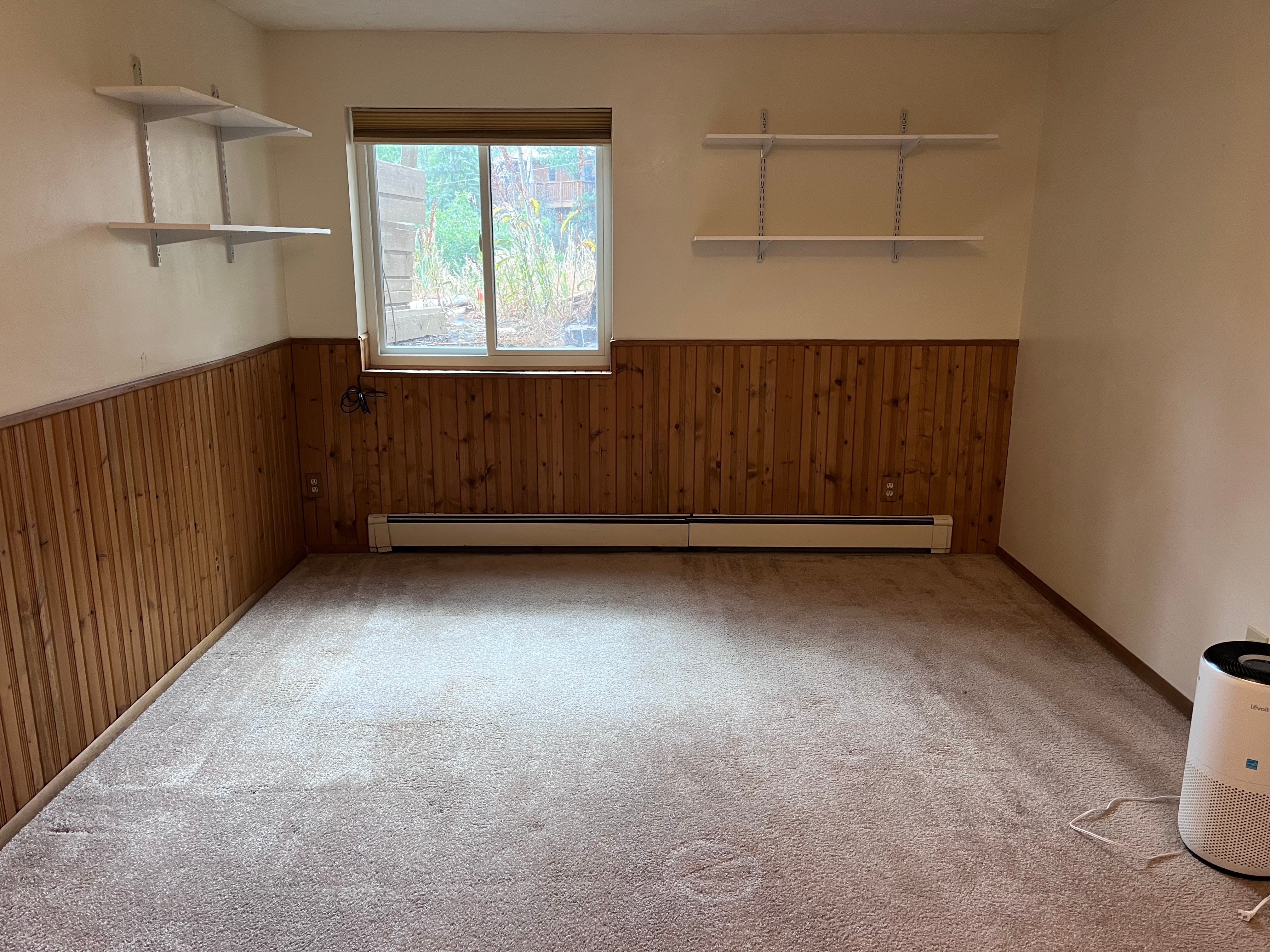
I’ve also gotten rid of most of the books, furniture and clothing. I’ll likely be moving to a small apartment at some point, but my primary plan is to spend a lot of time traveling with a smallish RV trailer. Those don’t hold much more than the essentials, and really do you need a lot more? The movers original on-line estimate was over $2000. When he came out to actually see what I had to move the estimate was halved. There is even still considerable room in my small 10x10 storage unit. The house, three floors with its four bedrooms, three bathrooms and a large family room, is now mostly empty. What furniture remains is on the main floor, and even that is sparse. There is now a lot more space in the kitchen cupboards as whole sets of dishes, glasses, silverware, bowls and other things gathered over the years is gone to thrift store shelves. Used clutter for those in need of more stuff.
Some of the things were hard to let go of, mainly for sentimental reasons. But once gone the feeling is liberating. I’m a fan of Henry Thoreau, whose advise was “simplify, simplify, simplify”. He lived that advice every day of his too short life. He had little tolerance for clutter, both in his life and his writing. His cabin at Walden Pond was a model of spartan simplicity. Yes, he would go over to the Emerson’s for dinner on occasion, but that wasn’t out of bonds in my thinking. My small RV will be spartan, but I’ll still stay at RV parks with hook ups and showers, and I’ll dine out occasionally. I’ll need the service of laundromats from time to time as well. I will need to curb any urge to buy more books though and get more acquainted with local libraries.
I’ll still buy a few flies here and there. That is a small pleasure from visiting fly shops that nearly all fly fishermen understand. I don’t need any new rods or reels despite what new technological advances may be hyped. The rods I built 30 years ago seem to work just as well at catching fish as any with new “flex technology”. Bamboo rods have been built the same way, by hand, for a very long time and still work just as well. I’ll keep a second camp chair in case someone joins me to contemplate the river while rigging the rod and pulling on waders.
Sorry if I’m not pulling my weight much anymore in support of our economy. There are other things worth more than money and following Henry’s advice helps to see that more clearly.
Terrific piece Ken. As I slowly move into my house, I strive to declutter.
I cautioned against making a big move, but now it’s been over a year, and I think you can trust in the decisions you’re making. You and Allen are both in the throes of change and you both seem to be embracing it.
After Susan’s death, I grappled with what to do, and embraced a nesting urge. Oh, I traveled some, but I put time, effort and a chunk of change into the home we had bought for retirement. It has served me well, and so I have to say it was the right decision for me.
I wish you well.